
Multilingual website

Mystifyingly, this magnificent website is no longer live.
Features / benefits
- Google presence for non-English searches for company products and services.
- Easier for non-English speakers to find already translated brochures.
- New languages are ‘automatically’ added to the website template.
- Each language stored in an easy to edit and read text file. Translators can work directly on source documents.
Cheap, quick alternative to full website translation
This website was a way for the company to have a multilingual presence on the internets without all the pain and expense of translating the main corporate website. And it would have been painful, and expensive.
The site contains summaries of the company’s main product groups. It doesn’t cover individual products, or the company, in the detail that the main website does but it’s enough for the website to be ranked on Google and for potential customers (and distributors) to gain a clear overview of the products available.
More detailed product information is available from already translated PDFs which can be downloaded from the website.
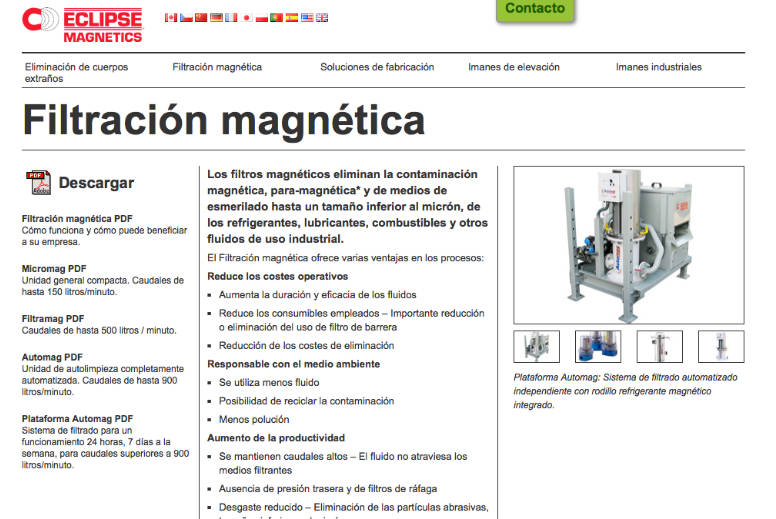
Easy to add new languages
This is just one website – a template – into which each different language is loaded when it’s selected.
Each language has its own file.1 The site looks through the file, sees what’s in it and loads the text, images and PDF links into the template accordingly.
To add a new language, a copy of the English file is translated. This is then uploaded to the server, two lines of code are added to the website to tell it there’s another language available and link it to the relevant flag icon and that’s it. It’s like magic. You’ve got an entirely ‘new’ website in less than a minute. (Of course you have to upload the relevant PDFs, if needed, but these are linked automatically.)
The translator works directly on the readable text file that the website uses. There’s no need for any special translator skills, which keeps the cost down. There are no cut and paste errors and the formatting is already taken care of.
But…
This is an ‘entry level’ way to build a foreign language website.
Translation companies are very keen to talk about ‘localisation’. It means that they don’t just do a word for word translation but rewrite a text so that a native speaker would recognise it as being from a fellow native speaker, with the right tone and language for the context.
Localisation also applies to design too. On they website, the text is localised but the website itself is not. The choice of typeface, colours and layout will have different associations in different cultures. Whether these associations are negative is something that should be checked. Ideally a website would be translated, designed and built by people who share a culture with its users. But that takes us back to painful and expensive.